What Is an Aircon Refrigerant Top Up?
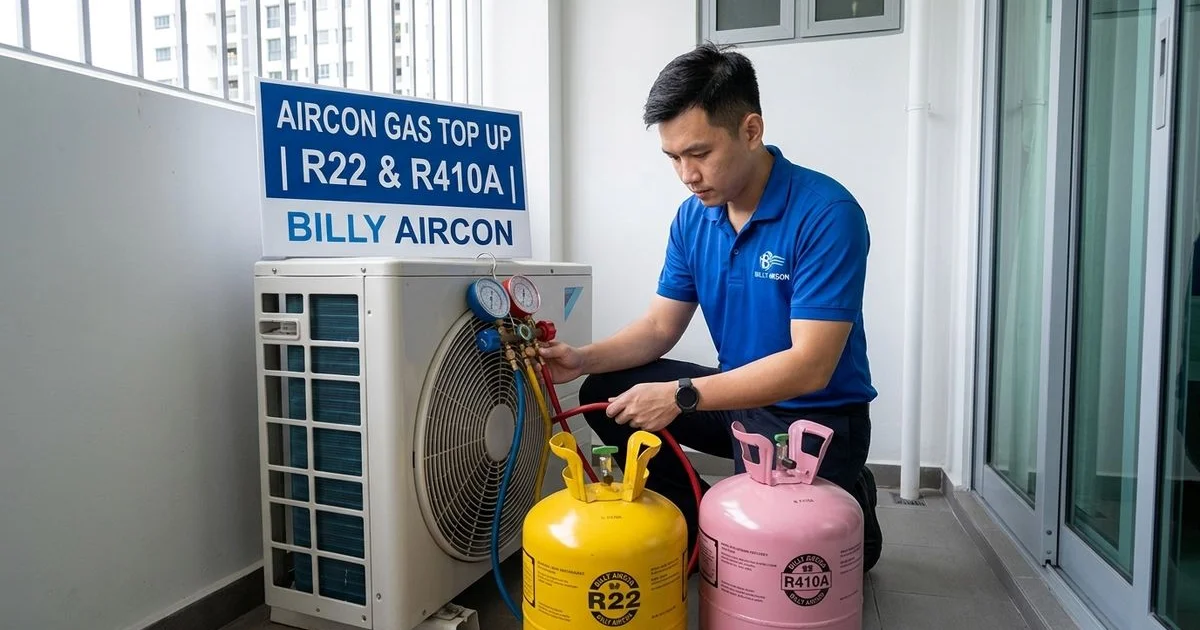
Your aircon uses refrigerant — commonly called “gas” in Singapore — to absorb heat from indoor air and release it outside. This refrigerant circulates through copper piping between the indoor evaporator coil and the outdoor condenser unit. When levels drop below optimal, your aircon loses its ability to cool effectively. This is a common issue affecting residential homes across Woodlands, from HDB flats in Marsiling and Admiralty to executive condominiums near Woodgrove.
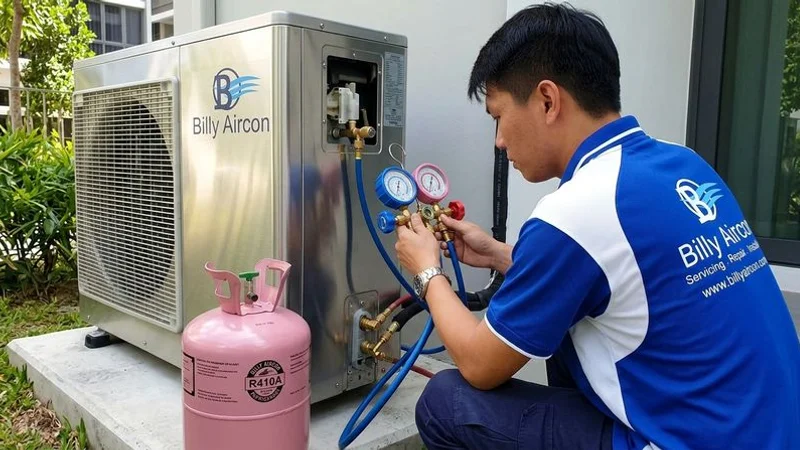
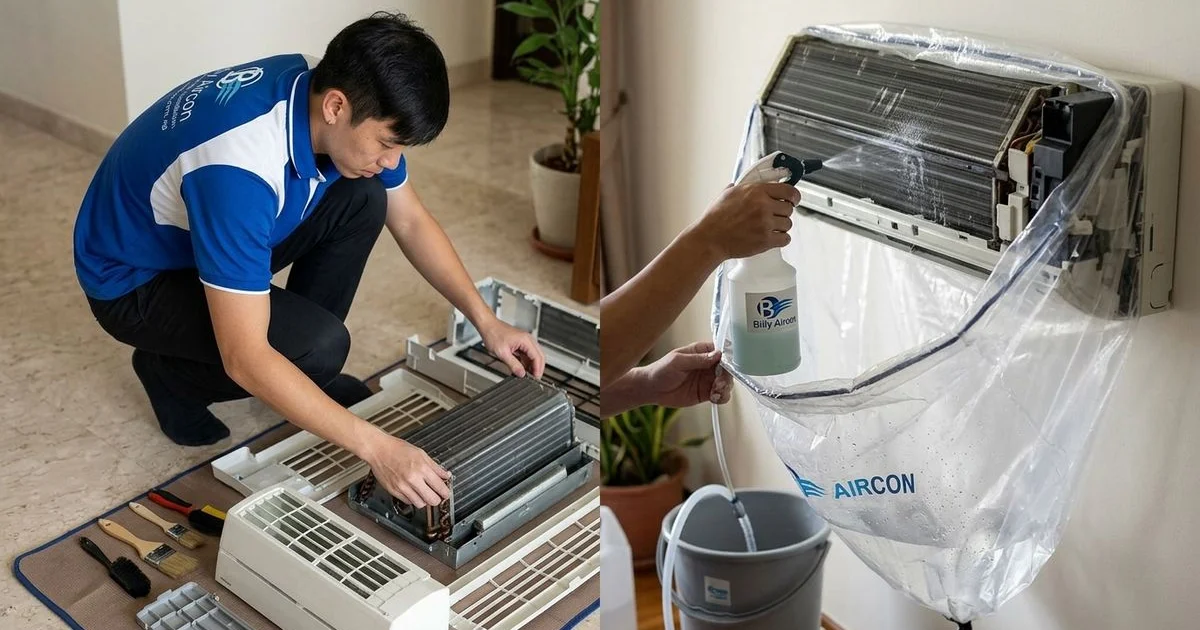
An aircon gas top up involves a licensed technician adding the correct type and amount of refrigerant to restore the manufacturer’s specified charge level. This is one of the most common fixes for an aircon not blowing cold air. For units that have not been maintained for over six months, a chemical wash may also be recommended alongside the recharge.
A properly installed aircon system should not lose refrigerant. If your Woodlands aircon needs frequent gas top ups, there is a leak that needs repair. Simply topping up without fixing the leak wastes money — the gas will leak out again. Regular general servicing helps detect low refrigerant levels early before they cause expensive compressor damage.
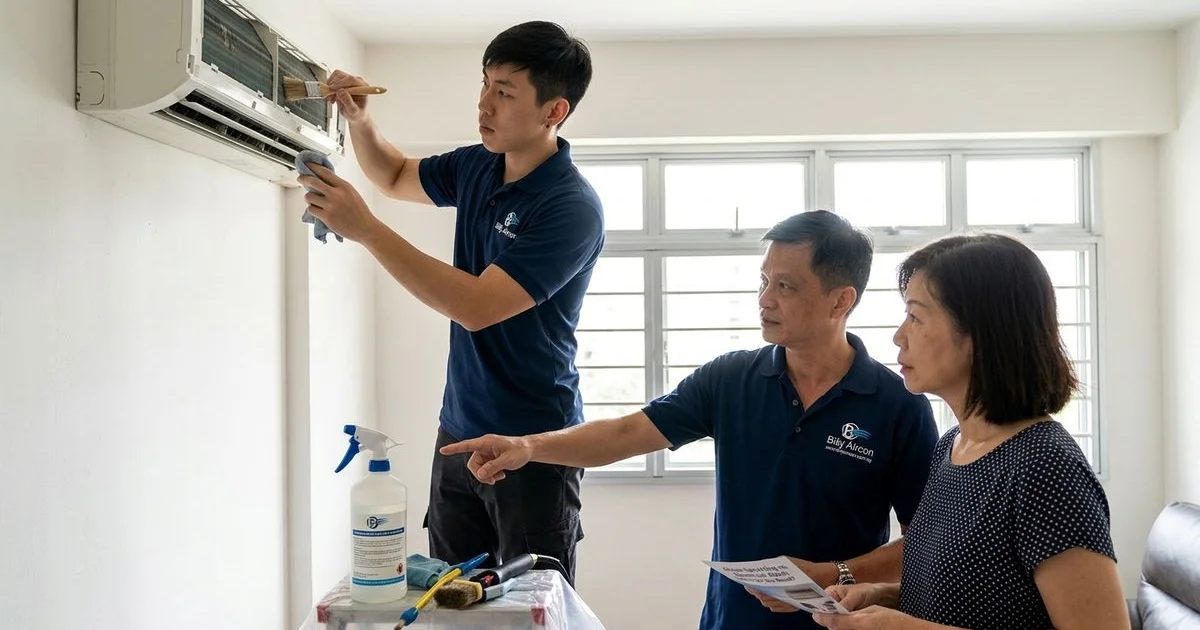
Billy Aircon Woodlands always checks for leaks before topping up refrigerant. Our local team, based near Woodlands MRT, informs you of the leak location, severity, and repair cost so you can make an informed decision. Every gas top up is backed by our 90-day workmanship warranty.
R22, R410A and R32 Refrigerant Pricing in Woodlands
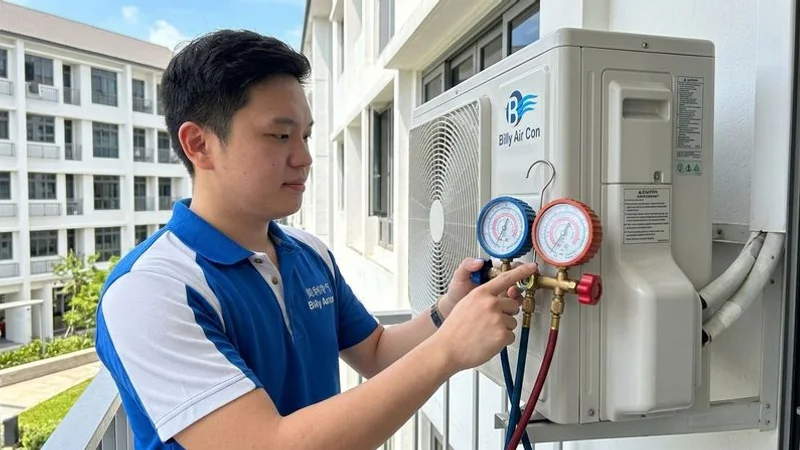
Different aircon systems use different types of refrigerant. Using the wrong type damages your system. Below are Billy Aircon Woodlands’ 2026 gas top up rates.
R22 (Freon) - $50 to $80
R22 is the older generation refrigerant standard in aircon systems manufactured before 2015. Many older HDB flats across Marsiling, Admiralty, and Woodgrove still run R22 systems. R22 is being phased out under the Montreal Protocol, and supply costs increase each year. If your R22 system is aging, consider upgrading to a newer R410A or R32 unit for better efficiency and long-term savings.
R410A - $60 to $150
R410A is the most common refrigerant in residential aircon systems sold in Singapore today. It replaced R22 as the industry standard, does not deplete the ozone layer, and offers better energy efficiency. Most modern systems across Woodlands new BTO developments use R410A.
R32 - $80 to $200
R32 is the newest generation refrigerant with lower global warming potential and improved efficiency. It is mildly flammable and must be handled by licensed professionals. The latest Daikin and Panasonic models installed in Woodlands BTO flats use R32 — NEA mandates proper recovery during servicing under Singapore’s environmental regulations.
Signs Your Woodlands Aircon Needs a Refrigerant Recharge
Reduced cooling performance — Your aircon runs but the room does not cool, even at the lowest temperature. Particularly noticeable in Woodlands where rooms heat up quickly due to the tropical climate.
Aircon runs continuously without cycling off — With low refrigerant, the system cannot reach the target temperature and runs nonstop, wasting electricity.
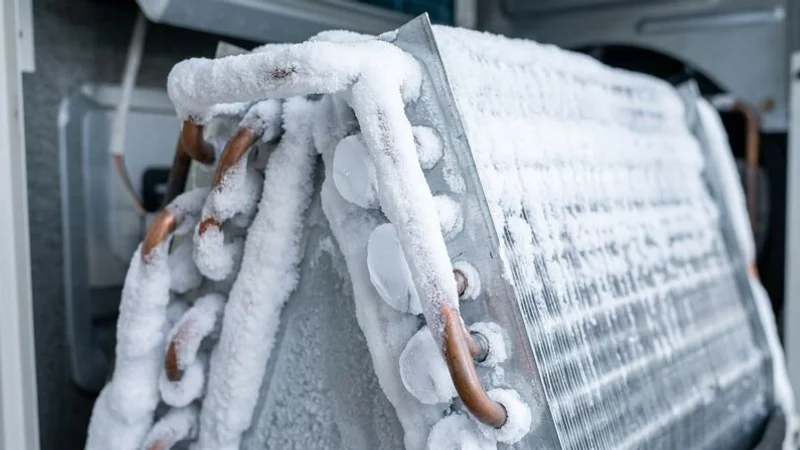
Ice formation on the evaporator coil — Low refrigerant causes the coil to drop below freezing. You might see ice on copper pipes or water leaking from the unit as the ice melts.
Hissing or bubbling sounds — Unusual sounds may indicate gas escaping through a crack in the piping or coil.
Higher electricity bills — An aircon with low refrigerant runs longer and harder. If your Woodlands electricity bill has increased noticeably without a change in usage, low refrigerant could be the cause.
Common Causes of Refrigerant Leaks in Woodlands
Vibration damage to pipe joints — Compressor vibration loosens flared connections over time. This is one of the most common causes of slow leaks in Woodlands HDB flats.
Corrosion of copper piping — Singapore’s humid air accelerates copper corrosion. Woodlands’ proximity to the Johor Strait adds moisture exposure, promoting pinhole development in older piping.
Poor initial installation — Improper flaring or brazing during installation can result in leaks that appear months later. This is why BCA-certified installation matters.
Age-related wear — Systems older than 8 to 10 years are more prone to leaks. Many older units in Marsiling and Admiralty are reaching this age threshold.
How We Recharge Your Aircon System
Step 1 - Diagnosis
Before adding gas, our Woodlands technician tests refrigerant pressure using professional gauges to determine exactly how much gas has been lost.
Step 2 - Leak Detection
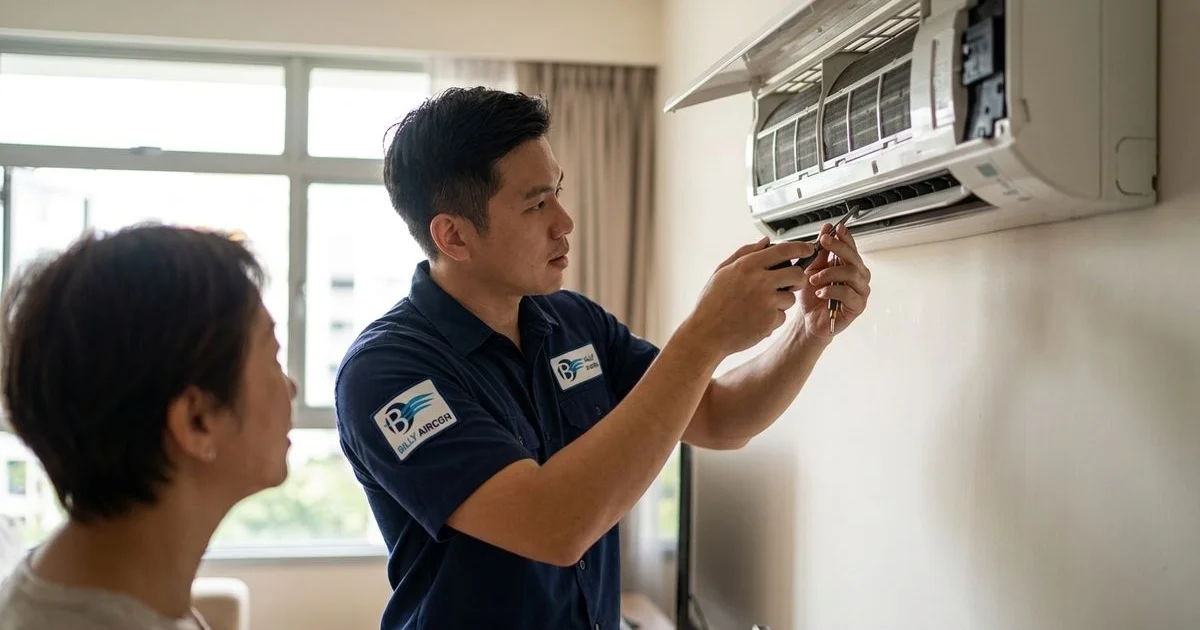
We inspect for leaks using electronic detectors and visual inspection of all connections, valves, and coil surfaces. If a leak is found, we provide a repair quote before proceeding.
Step 3 - Refrigerant Identification
We verify the gas type from the data plate on the outdoor unit. Mixing different refrigerant types damages compressors.
Step 4 - Gas Top Up
Using calibrated equipment, we add the precise amount needed to reach the manufacturer’s specified charge level. Too little means inadequate cooling; too much damages the compressor.
Step 5 - Performance Test
We run the aircon for at least 10 minutes, measuring supply and return air temperatures and refrigerant pressures to confirm proper operation.
How Billy Aircon Woodlands Compares
| Feature | Typical Provider | Billy Aircon Woodlands |
|---|---|---|
| Leak check before top up | Sometimes skipped | Always included |
| Licensed handling | Varies | All technicians licensed |
| Workmanship warranty | None or 30 days | 90-day warranty |
| Pricing transparency | Quote on-site | Published rates from $50 |
| Response time | 2-3 days | Same-day (local Woodlands team) |
| R22, R410A and R32 | Limited | All three gas types |
Licensed Refrigerant Handling
In Singapore, refrigerant handling is regulated under the Environmental Protection and Management Act. All Billy Aircon Woodlands technicians are trained and licensed for refrigerant handling. We use calibrated equipment, follow safe handling procedures, and ensure no refrigerant is vented into the atmosphere. Used or recovered refrigerant is disposed of through NEA-approved channels.